Anal Beads
 Anal Vibrators
 Butt Plugs
 Prostate Massagers
 Alien Dildos
 Realistic Dildos
 Kegel Exercisers & Balls
 Classic Vibrating Eggs
 Remote Vibrating Eggs
 Vibrating Bullets
 Bullet Vibrators
 Classic Vibrators
 Clitoral Vibrators
 G-Spot Vibrators
 Massage Wand Vibrators
 Rabbit Vibrators
 Remote Vibrators
 Pocket Stroker & Pussy Masturbators
 Vibrating Masturbators
 Cock Rings
 Penis Pumps
 Wearable Vibrators
 Blindfolds, Masks & Gags
 Bondage Kits
 Bondage Wear & Fetish Clothing
 Restraints & Handcuffs
 Sex Swings
 Ticklers, Paddles & Whips


The Art of Flower Advantage
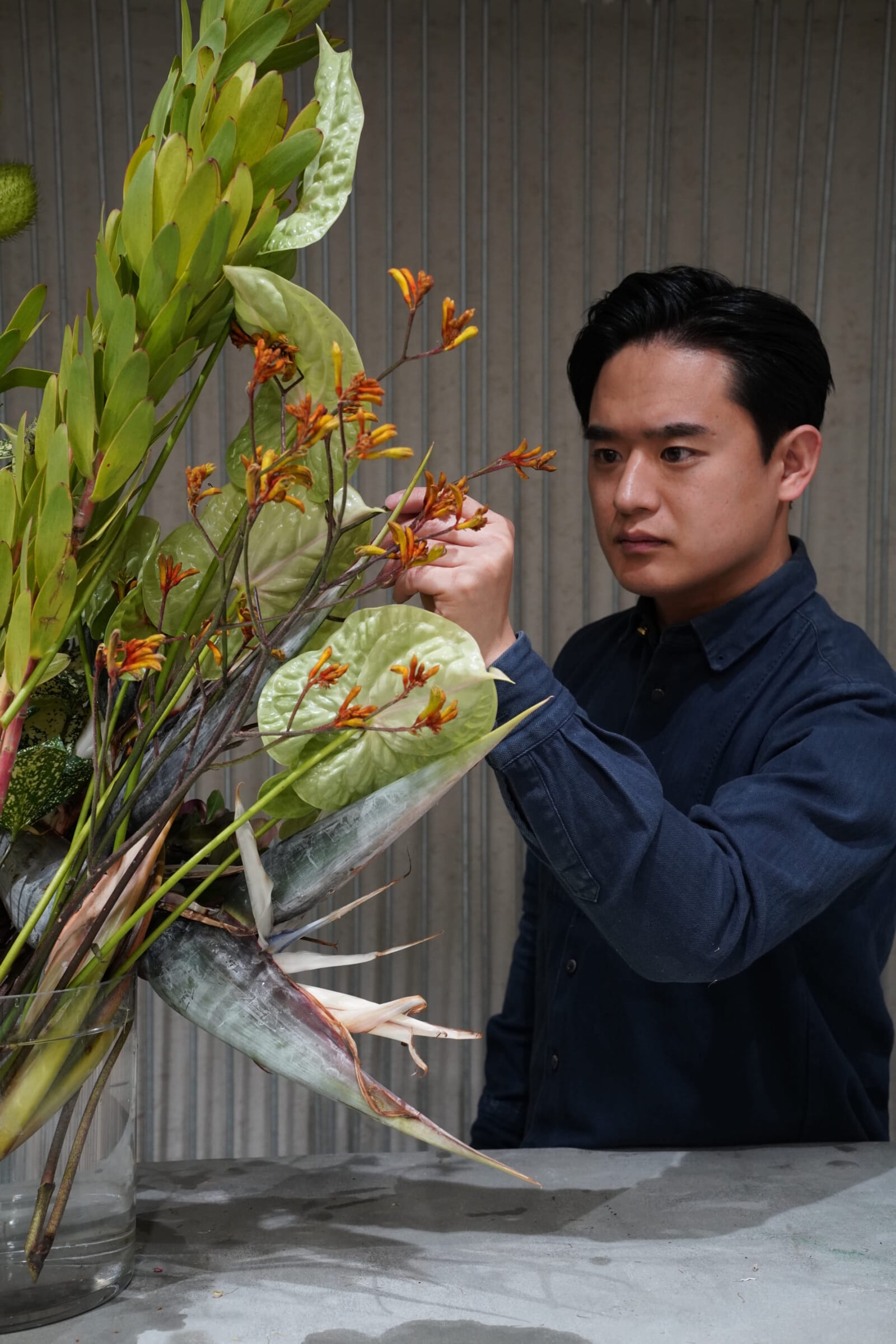
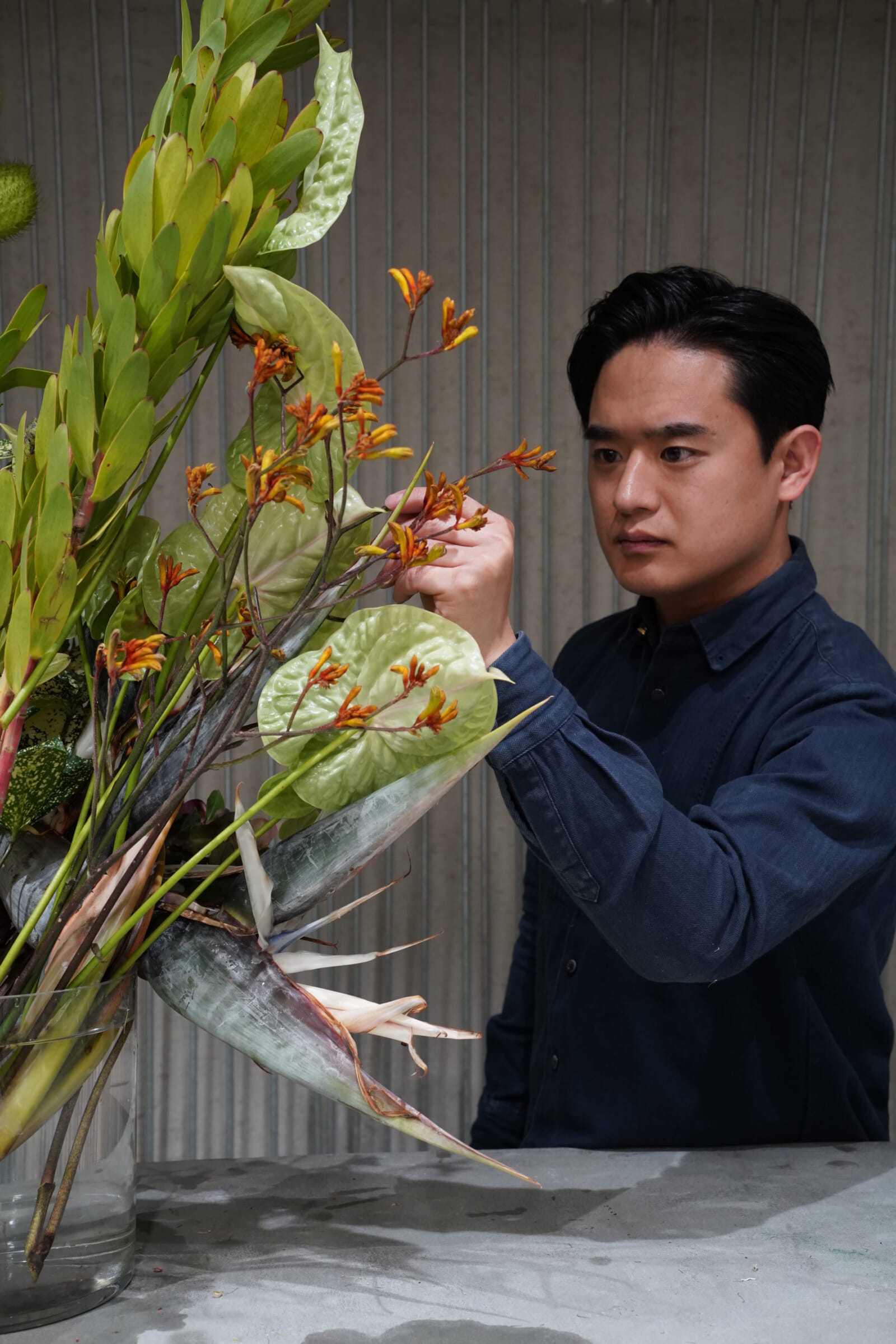
I first discovered Tambi Flower the way many people probably did: while scrolling through Instagram late at night. His videos show up in my feed—quick and stylish clips of him making arrangements, where he transforms individual plants into sensual bouquets and sculptures. The editing is crisp and snappy, often in perfect sync with the background music. He never speaks, never narrates. Instead, the camera sees him quickly and confidently trimming the stems, dousing the flowers with a satisfying splash, and then assembling everything with an almost surgical precision.
Noa Sakamoto, the heart and floral artist behind Tambi Flower, always looks incredibly chic on screen. Sometimes he wears a leather jacket in the studio. Other times, a carefully tied silk scarf or a beret make him look more like a young artist in a Paris studio than a florist in Hyogo Prefecture. It’s obvious that he has an eye not just for flowers, but for atmosphere and storytelling.
After watching enough of his videos, curiosity got the better of me. Two years ago I decided to commission him to create a bouquet to commemorate my loved one’s graduation in Osaka. He responded enthusiastically, and when pick-up day arrived, I went to his studio, curious to see how this digital floral world would translate to real life.
blooming space
Tambi Flower is located in an unassuming building in the Koshienguchi Ward of Nishinomiya City, Hyogo Prefecture, a neighborhood where college students ride their bikes to class and where local mom-and-pop shops buzz quietly in the afternoon. It doesn’t look like a place where artists with hundreds of thousands of views on Instagram work.
When I opened the door, the space felt like a compact and slightly chaotic small biological laboratory. Concrete walls and floors keep everything cool and grounded, while metal shelves are filled with flowers: waxy tropicals, slender branches, velvety petals and long stems that curl as if stretching toward the light.
Behind the counter, Sakamoto raised his head and showed a friendly smile. Tinted sunglasses cast a hint of color on his face. He is making a bouquet, pruning a spider flower quickly and rhythmically.
I ordered my arrangement online with only the vaguest of descriptions: dark, cool, unique. I left all the rest to him. The bouquet he handed me felt like something out of a Tim Burton movie. A violet anthurium, a shell pink rose, chrysanthemums and a dark dahlia sit together like a quartet, surrounded by black leaves and navy blue paper. Needless to say, everyone at the ceremony asked about it and marveled at how cool and unusual it was compared to all the standard bouquets that were passed around for photos.
That day, Sakamoto was very enthusiastic, soft-spoken and considerate. At the time, I had no idea that he would become more popular or that his work would become increasingly artistic. Years passed, and as Tenby Flower grew, I reached out again, this time as a writer, to interview him tokyo weekend.
An origin story from stillness
Sakamoto’s flower arranging journey did not begin with a childhood dream or formal training, but with a period of silence and reflection: during the pandemic, he suddenly found himself with a few hours to spare. One afternoon, he impulsively decided to get rid of all the furniture in the room except his desk. When he stepped back and looked at what he had done, the space felt empty.
“The room looked lonely,” he told TW via email. “So I tried putting some flowers in there. That was the first step.” Flowers soften the emptiness and make the room feel more alive. He continued to buy more. He noticed things he hadn’t noticed before—the way the stems curved, the way colors changed in different lights, and how the textures carried emotion. Slowly, flowers became his language.
“Plants don’t argue or complain. They don’t talk back. I can be completely honest with them,” he explains. “I don’t talk much, so flowers always help me talk.”
When beauty meets discomfort
Sakamoto’s style is not pretty in the traditional sense. His arrangements are often full of tension—pairing soft petals with prickly lines, or setting glossy flowers on stems that seem on the verge of collapse. This duality is intentional; at the heart of his practice is a concept he calls “tambi,” borrowing the Japanese word for decadence and beauty. However, his interpretation leans toward the dark side.
“To me, ‘tambi’ is about showing beauty through what’s behind it, the grotesque, the dark, the decadent,” he says. “It’s more than just softness and beauty.”
This worldview culminates in “flower dominance,” a philosophy that acknowledges the inherent violence of flowers. “We cut flowers—we kill them—and then decorate with them,” he wrote. “That alone gives us a dominant position in the floral space.”
Rather than pretending that this didn’t happen, the artist incorporated this discomfort into his aesthetic. He believed that beauty came not only from the flowers but also from the tension and uneasiness that went into the arrangement.
His work is also sensual. The flowers are shiny, moist, and vibrant. When they wither, they crumble like something taking its last breath. “The beauty of decay and the beauty of life feels very close to human desire,” he said. “Plants and people have similar need patterns.”
One of the reasons Sakamoto’s work is so striking is its sculptural quality. His works are not passively placed in vases but intentionally protrude, curl, unfold and twist. “Once you decide to use flowers, you are taking control of your life,” he points out. “So for me, flowers are not something I decorate. They are something I am allowed to use.” This sense of responsibility—the idea that flowers allow him to shape them—adds weight to his artistic choices. His work is more than just self-expression; it’s also a form of collaboration with the plants he chooses to use.
Sakamoto hopes to share this worldview with others. He recently held his first solo exhibition “Counter” at Pupil Studio in Hyogo Prefecture. Although he designed and installed the exhibition himself, he also invited visitors to create their own sculptures using 50 flowers. Through collage and poetry, the exhibition connects physical form with emotional mapping.
In addition to the live arrangements, Sakamoto also created photography that transformed flowers into humanoid creatures. He dismantles the plants and reassembles the petals, stems and roots into figures against a black background. Some of the pieces are paired with poems he wrote himself. One piece, “My Eyes,” shows an eyeless creature with a lotus seed head; another, “Bloom,” shows a creature with auburn leaves for hair and a garment made of crumpled petals and dried leaves.
Looking to the future
Today, Sakamoto has more than 335,000 followers on Instagram—a number that still surprises him. Despite his online fame, he remains down to earth.
“Social media does not directly affect my expression,” he said. “But I’m grateful. The warm comments and clients who believe in me… they’re kind of like medicine to me. They reassure me that it’s okay to trust my direction and keep going.”
In addition to his first solo exhibition at Pupil, Sakamoto has begun to expand his practice internationally, most recently through the development of Gravity Vase in collaboration with Berlin design and architecture studio Fundamental. This is a steel and glass container designed to bring a new sense of freedom to floral sculptures. The container is composed of multiple geometric grids that allow plants to be placed throughout the container from the top or sides.
As for what’s next, he hopes to continue his work with flowers and experimenting with sculpture and mixed media. One day, he would like to realize his dream of performing in Tokyo, “the big city,” he jokes. From his early days in empty rooms to the present, Noah Sakamoto’s practice has evolved into a clear, unique voice that continues to evolve as he reshapes the way we see and feel about floral art.
More information
Follow Noa Sakamoto on Instagram: @tambiflower.